The work moves.
The context
should too.
I built TPLLM to carry the program context that teams keep reconstructing in meetings. It connects what was said, what changed in code, who owns the next step, and what the evidence actually supports.
Ontology and relational intelligence connect the evidence. Two intelligence lanes turn that context into bounded judgments and structured reasoning, with TPLLM policy governing what happens next.
Explore ontology & architecture Hosted dashboard · Vercel sign-in may be requiredA PROGRAM, OPENED UP
One program.
A connected world.
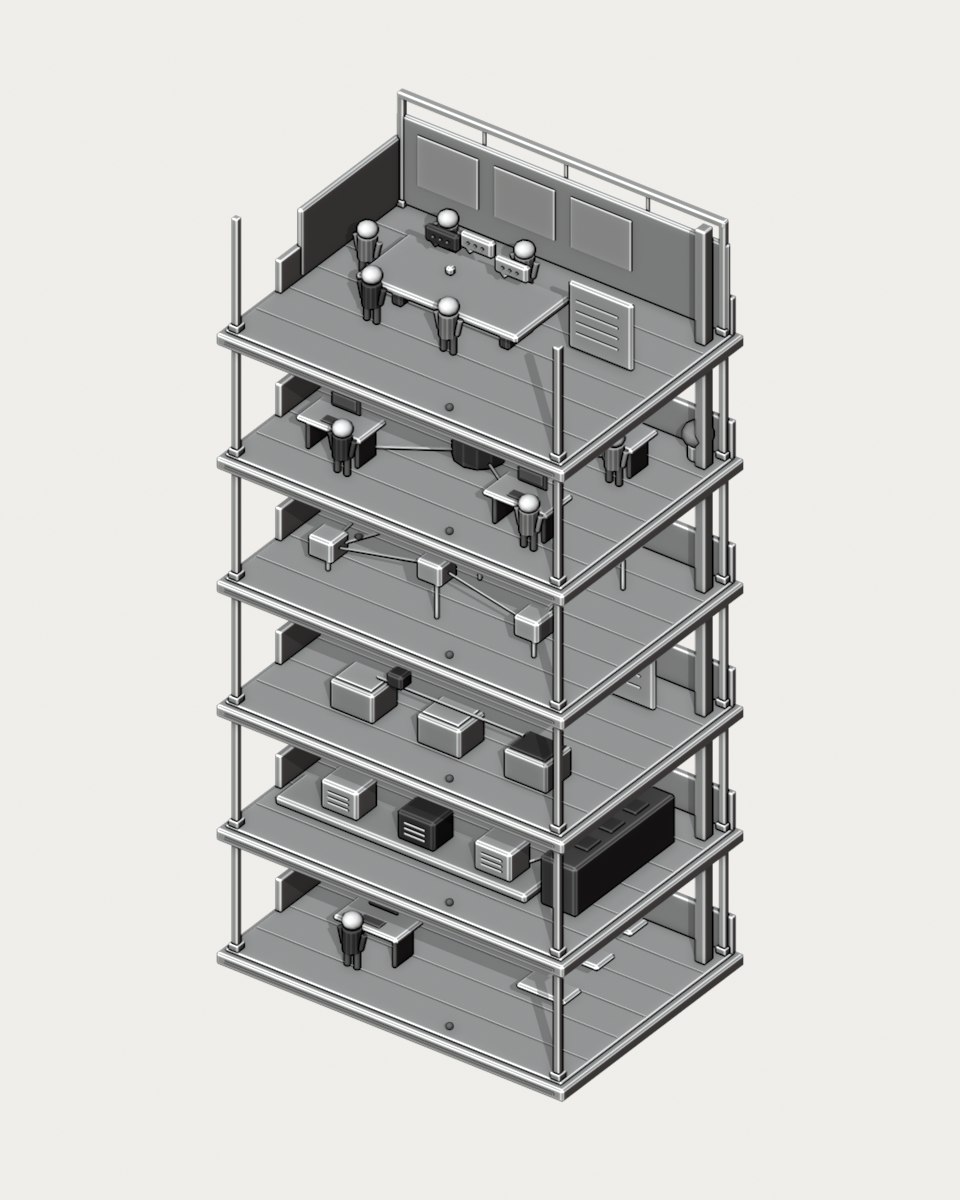
A conversation upstairs. A change in the code. A decision waiting for context. Scroll to open the model and follow what connects them.
THE QUESTION BEHIND THE SYSTEM
What if the next meeting
was already a brief?
Watch repeated status questions accumulate meeting time. Then explore the intended alternative: reusable context, with people brought in for the decision.
Adjustable assumptions. These clocks are an animation, not measured TPLLM savings or processing speed.
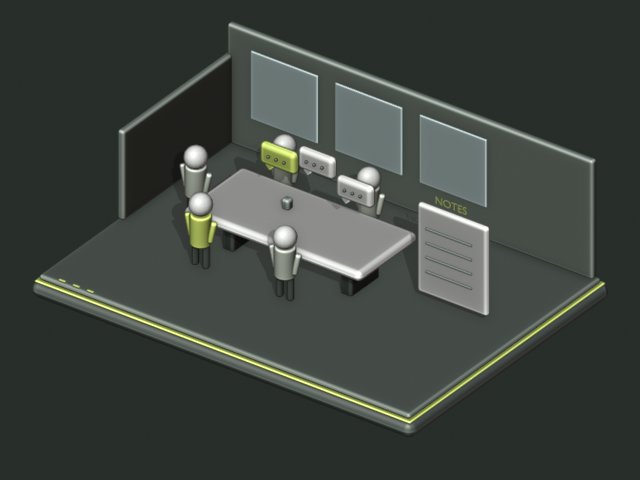
The same information is reconstructed in each status meeting.
Context travels forward. The scenario reserves one focused review.
Change the scenario assumptions +
Calculation: meetings × minutes per meeting − one focused review. This compares meeting duration, excludes preparation and operating costs, and assumes the repeated status meetings can be replaced. It is not a causal estimate or a measured outcome.
THE STRUCTURE BEHIND THE SCENARIO
Context is connected.
Intelligence should be too.
Ontology and relational intelligence give both lanes their context. Follow a source through the shared model, the question, the response, and the controls that govern what can happen next.
Facts become context
through their connections.
The ontology defines what things are and how they relate. Relational intelligence follows those supported relationships to understand who owns the work, what it affects, and which evidence belongs in the next question.
ILLUSTRATIVE PROGRAM · SELECT AN ENTITYVisual-search launch
The project brings the commitment, engineering change and KPI context together. Relational intelligence follows these links to frame a useful question.
Trace into both intelligence lanes- Update package belongs to Visual-search launchProject scope
- PR #42 changes Visual-search launchPR project link
- Visual-search launch measured by Request-match KPIProgram KPI definition
THE COMPLETE TPLLM ARCHITECTURE
One foundation. Two intelligence lanes.
Explicit control over action.
Select any block to highlight its upstream context and downstream dependencies.
DECISION QUESTION / JEVWhich supported risk family fits?
REASONING QUESTION / STRUCTURED OUTPUTSWhich causes interact across this launch, and what remains unknown?
Architecture and governance map. In the current Phase 2 implementation, the two lanes produce journaled artifacts for Intelligence Review. The arrows describe relationships and governance order, not automatic execution. Existing Phase 1 insight candidates use validate_insight(); TPLLM policy and separate authority controls govern external action.
BUILT TO KEEP THE EVIDENCE CLOSE
Jev judges. Reasoning synthesizes.
TPLLM governs.
IMPLEMENTATION & EVIDENCE
An answer is useful when
you can see what supports it.
TPLLM is an AI technical program manager built around evidence, a shared model of the program, and explicit authority. The dashboard brings that system into a working interface. The newer intelligence layer gives bounded judgment and deeper reasoning distinct jobs.
| CURRENT SCOPE | WHAT THAT MEANS |
|---|---|
| Shipped dashboard | Hosted on Vercel, with views for meetings, engineering, KPIs, relationships, tasks and decisions. Access protection and source permissions remain separate from deployment. |
| Connected context | Collectors support authorized Google Calendar, Slack, Zoom AI summaries and GitHub records. Missing summaries and collection limits remain visible. |
| Governed action | Internal Slack project-status updates can execute under exact standing delegation, with expiry, revocation and duplicate suppression. Other external action classes need scoped adapters. |
| Intelligence integration | Jev and Structured Outputs are implemented in the public codebase. Deployment of the newest reasoning lane has not been verified. |
| Evaluation still ahead | Mock and fixture results validate infrastructure. Real-provider quality, calibration, workflow benefit and meeting-time savings have not been established by the reviewed evidence. |